
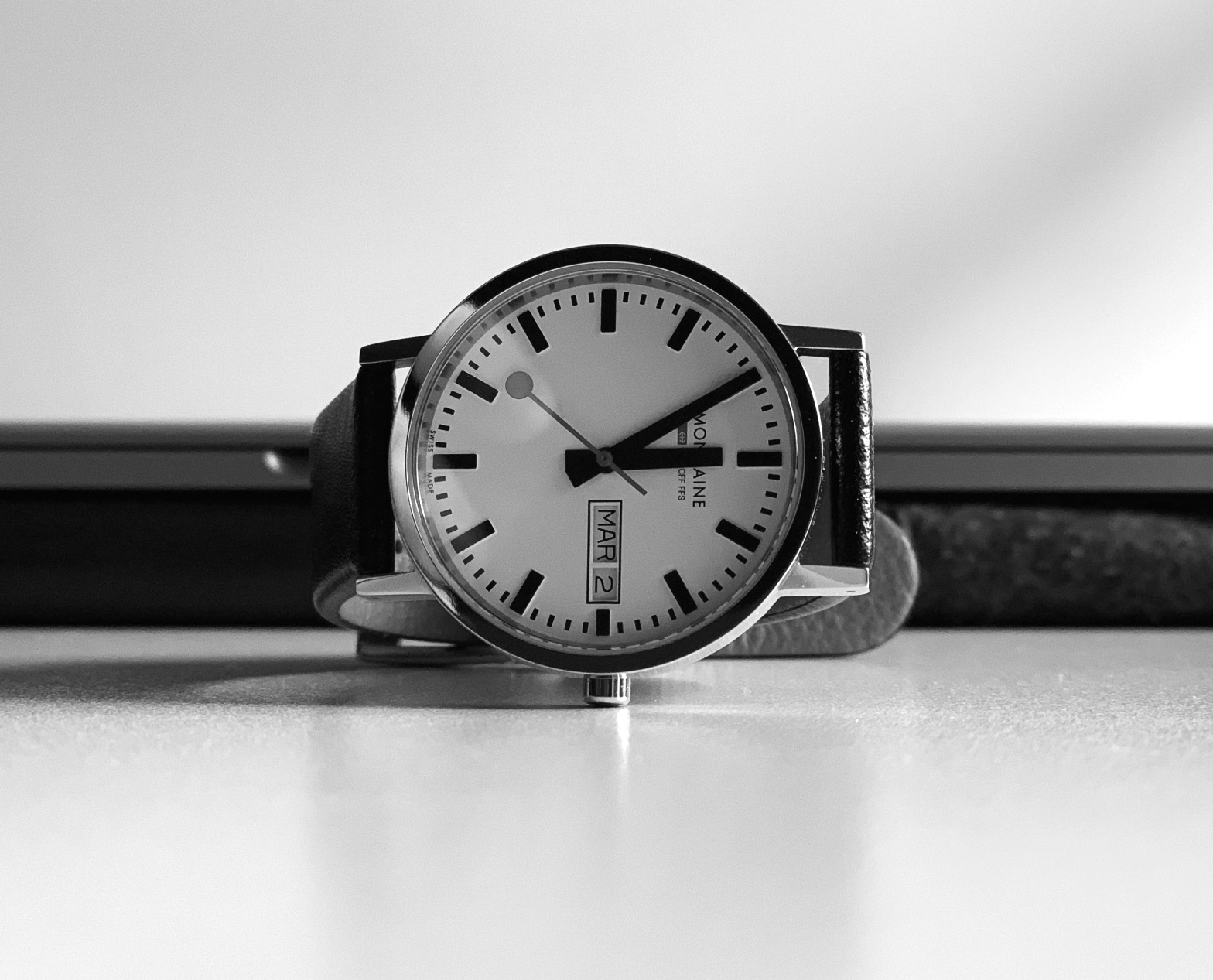
I had to change the time on my wristwatch this morning. The clocks went forward, you see.
It’s an act somewhat forgotten for those of us who are reliant on modern technology. Our computers, smartphones and assorted other devices automatically adapt to British Summer Time and Greenwich Mean Time, and take our alarm settings with them. One need no longer worry about actually having to do anything. It’s one of those weird little problems that we never used to think a problem, but a problem nonetheless that has been solved by technology.
As a technology-reliant thirty-something I surprised those around me when I abandoned the smartwatch last winter and moved over to an old-fashioned analogue watch. Prior to the Apple Watch, which I loved but found lacking (from a design perspective I found it a little uninspired, whilst the battery life is a hindrance) I hadn’t actually worn a wristwatch for the best part of 20 years, since my schooldays, with the watches USP usurped by the mobile phone. The Apple Watch helped me to fall back in love with the timepiece.
When seeking an alternative I looked toward Apple’s own influences. In 2012 the Cupertino company paid over $20 million to licence the iconic clock face design of the Swiss Federal Railway service, the SBB, for their iOS operating system. The simple design was created by Hans Hilfiker in 1944, and has been recognised for its clean and straight-forward approach to telling the time by the likes of the London Design Museum and New York’s MOMA. Swiss watchmaker Mondaine have produced a wristwatch based on the clock face since 1986, and it was one of their pieces that I opted for when leaving the smartwatch behind.
I went for the Mondaine Classic day, date and time model. It was relatively inexpensive; at around £200 it was half the price of the Apple Watch that lasted three years before being rendered obsolete by the manufacturer, and this feels significantly lighter on the wrist and eminently more stylish. The return to analogue brings with it other benefits too. I spend my working day and much of my downtime staring at electronic screens infusing my eyes with blue light. The smartphone could become the first real casualty in the pushback against screen time; while the health benefits of such devices are undeniably valuable, the intimate stream of pulse-fed notifications and prompts impresses upon the wearer an extra layer of digital anxiety.

 The Glass Family