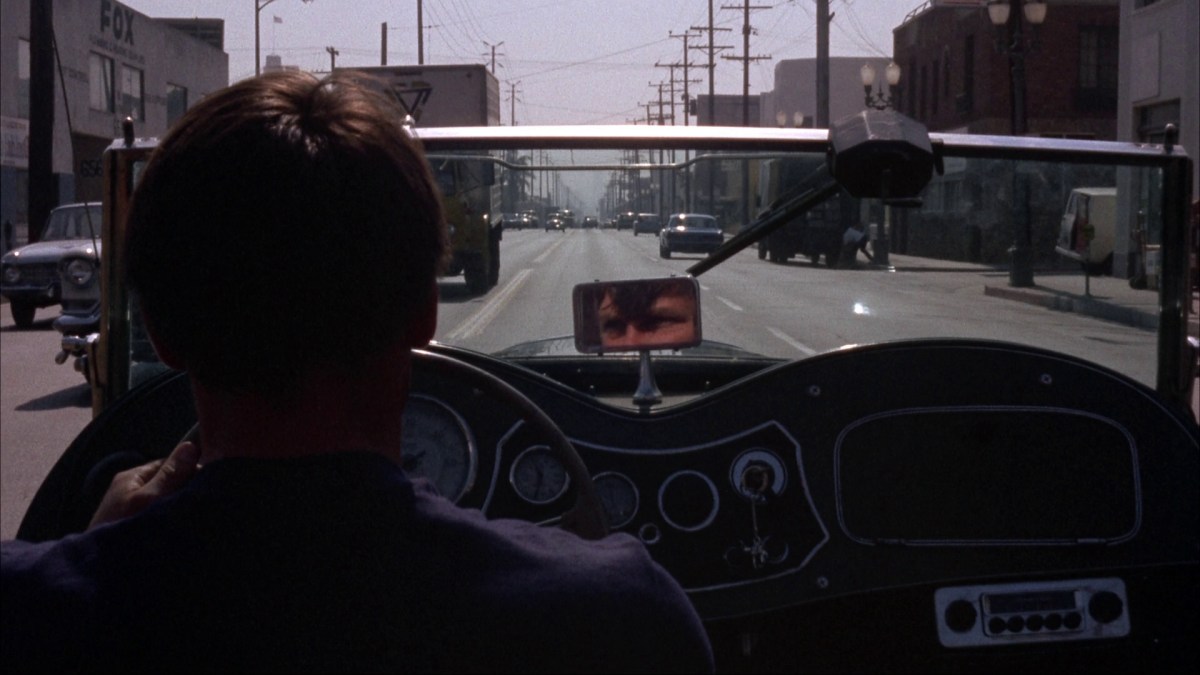
Made just seven years apart, it’s a stark reminder that though Demy strayed far from his homeland of France, the mood remained the same, even if the Nouvelle Vague cool of the Left Bank director’s early work is here replaced with something altogether more All-American. The sight of Lockwood in blue jeans cuts coolly against the recycled image of Belmondo, here a photograph on a wall rather than a loveable rogue on the streets of the Champs-Elysees, while the recitative musical of Les Parapluies de Cherbourg and Les Demoiselles de Rochefort is replaced by the musical stylings of Spirit, the now largely forgotten rock band who found some success during this period. It’s a weirdly contemporary note for a director whose work generally tends to be ground in the forever and fantastical. While the plot of Les Parapluies de Cherbourg, for example, surrounds itself with the real-world horror of the Algerian war the films legacy forgets this, and it stands as a work that lives across the ages. In Model Shop Demy grounds his film in similar territory, with the Algerian Revolution here replaced with Vietnam, but here the spectre is much more imposing.
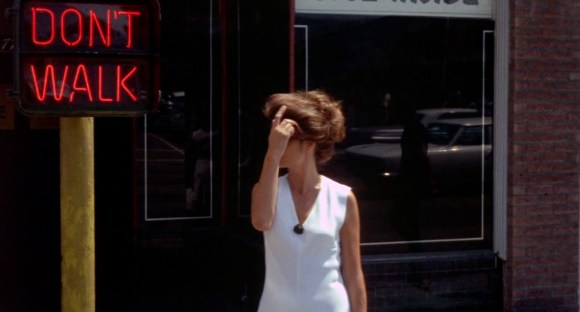
Demy sees Los Angeles through a foreigner’s eye. The city looks half-formed, like a film set in flux, with everything carrying a dust sheen atop. The dive bar is a genuine dive, while hitchhikers and Free Love linger in the air. Something (maybe the oil drills) had me thinking of Five Easy Pieces, Bob Rafelson’s film that would arrive in the following year. Both films take place in California, and both offer a side of the Golden State scant seen on screen. The Demy film, for example, chooses to avoid the Hollywood sign, a curious move from a director who worked with Gene Kelly that one can only assume deliberate due to the director’s cineaste leanings.
While Model Shop is something of a departure for Demy, dreams and dreaming remains at the forefront of the picture. The imagination runs through, from the openig salvo in which a man wakes up and is immediately pressed about the dreams from which he has just been woken through to the shattered reality to which he eventually comes to as the picture closes. The American Dream, it would seem, is a nightmare, in which the ambitious young Angeleno is damned to a fate of probable death in the unnecessary twenty year war in Southeast Asia.

 The Glass Family